
 EN
EN
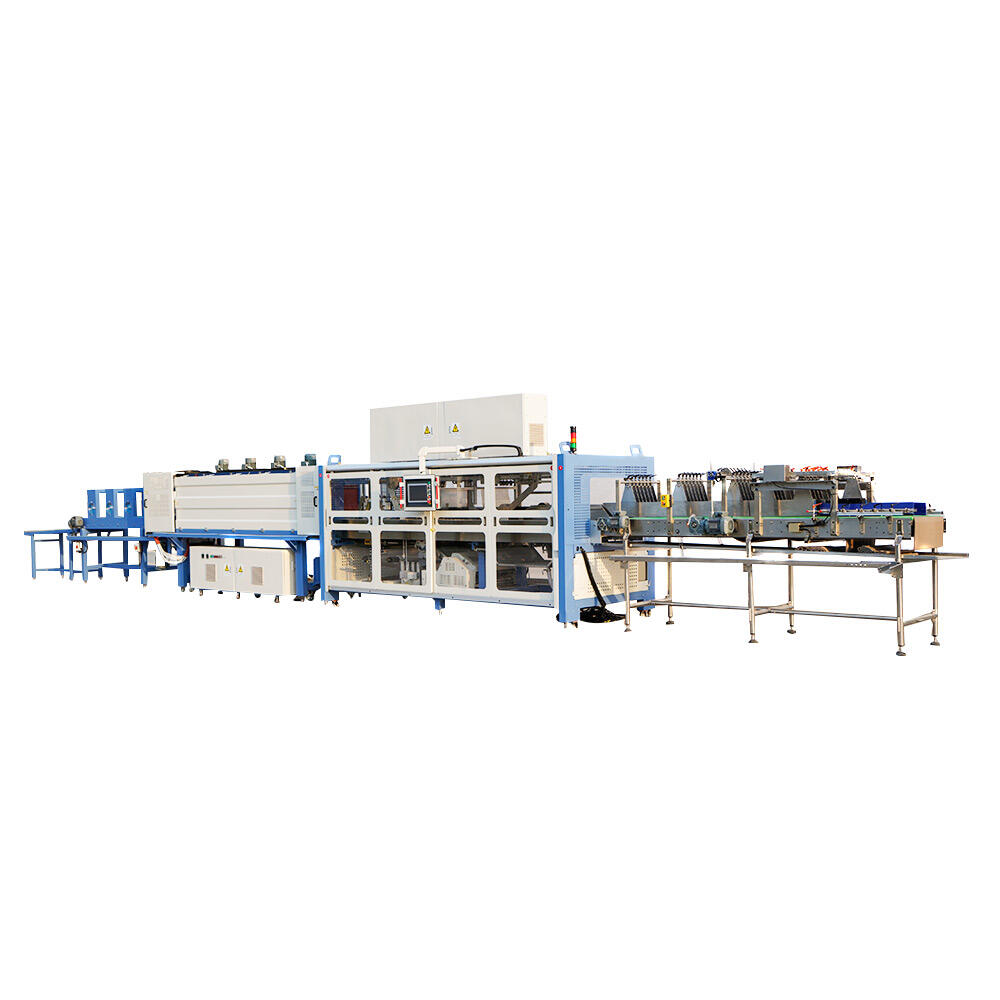
Selecting the right tray packaging system is one of the most consequential decisions a production or logistics manager can make. Whether you are running a small food processing line, a mid-scale consumer goods operation, or a high-volume industrial facility, the type of Shrink Packaging Machine you invest in will directly affect throughput, labor costs, product appearance, and long-term scalability. The market currently offers three distinct tiers of automation — manual, semi-automatic, and fully automatic — each suited to different operational realities.
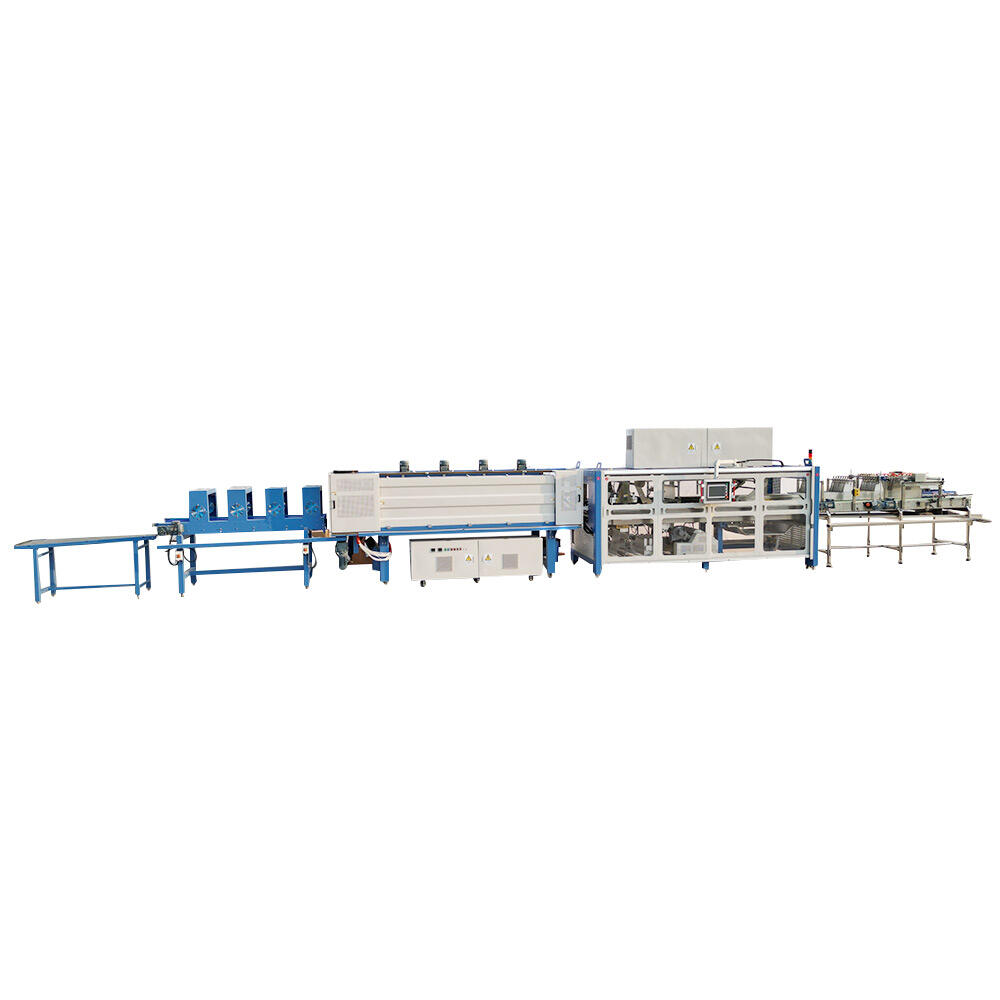
Understanding what differentiates these three systems — and knowing which one genuinely fits your business — requires more than a quick cost comparison. You need to evaluate production volume targets, workforce capability, product fragility, budget constraints, and room for future growth. This guide walks through each automation tier with practical clarity, so your decision about a Shrink Packaging Machine system is grounded in operational logic rather than guesswork.
Understanding the Three Tiers of Tray Packaging Automation
What Manual Tray Packaging Involves
Manual tray packaging systems require operators to hand-place products into trays, feed film or wrapping material, and initiate each sealing or shrinking cycle individually. In the context of a Shrink Packaging Machine setup, manual configurations typically involve a standalone heat tunnel or L-bar sealer where the operator controls every stage. These systems are low in capital cost but high in labor dependency.
For businesses producing fewer than 200 to 400 units per shift, manual systems may be entirely appropriate. Small artisan food producers, specialty gift companies, and low-volume pharmaceutical packagers often operate effectively at this level. The key advantage is flexibility — operators can switch between tray sizes, product types, and film formats without retooling.
However, manual packaging introduces significant variability in presentation quality. Inconsistent wrap tension, uneven heat application, and operator fatigue all contribute to higher rejection rates. If product aesthetics matter to your buyers — particularly in retail packaging — the limitations of manual shrink packaging become evident quickly.
The Semi-Automatic Tier: Bridging Volume and Control
Semi-automatic tray packaging systems retain some operator involvement but automate the most critical and repetitive elements of the process. A typical semi-automatic Shrink Packaging Machine handles film feeding, sealing, and heat tunnel conveyance automatically, while an operator loads products onto the tray and initiates the cycle. This hybrid approach meaningfully increases throughput without requiring the infrastructure investment of a fully automated line.
Production volumes in the range of 400 to 1,500 units per hour are commonly achievable with semi-automatic shrink packaging configurations, depending on product size and film type. This range covers a broad segment of small-to-mid businesses in food, household goods, hardware, and industrial component packaging. The learning curve for operators is manageable, and changeover times between product formats remain relatively short.
Semi-automatic systems also represent the most common entry point for businesses planning to scale. Many operators start with a Shrink Packaging Machine at this tier and upgrade components — such as adding an auto-feed conveyor or an automated product placement system — as volume demands increase. This modular growth path is a practical advantage for businesses with uncertain or rapidly changing production forecasts.
Fully Automatic Tray Packaging: When It Makes Business Sense
Core Characteristics of Full Automation
A fully automatic Shrink Packaging Machine system integrates product infeed, tray forming or placement, film wrapping, sealing, heat shrinking, and outfeed conveying into a single uninterrupted workflow. Operators are primarily responsible for loading bulk product, monitoring the line, and performing scheduled maintenance — not for executing individual packaging cycles. Automation controllers, sensors, and servo drives manage the precision work.
Full automation is the correct choice when production demands consistently exceed 1,500 units per hour, when labor costs are a strategic concern, or when packaging consistency is a non-negotiable requirement — such as in export-ready retail packs or regulated product categories. The capital investment is substantially higher than semi-automatic alternatives, but the per-unit cost of packaging drops sharply as volume increases.
Fully automatic shrink packaging lines also deliver superior repeatability. Every package produced meets the same film tension, seal integrity, and shrink finish standard. This consistency is particularly valuable for businesses supplying large retail chains or export markets where presentation standards are enforced by buyer specifications.
Integration with Existing Production Lines
One of the most important practical considerations when evaluating a fully automatic Shrink Packaging Machine is how it integrates with your upstream and downstream equipment. Fully automatic systems are designed to accept product input from filling lines, cartoning machines, or robotic pick-and-place units, and to feed output directly into labeling, case packing, or palletizing stations.
This level of integration requires careful engineering planning. Conveyors must be speed-matched, product spacing must be controlled, and the control systems of adjacent machines must be capable of communicating with the shrink packaging unit. Businesses without existing automated infrastructure may face significant ancillary investment when adopting a fully automatic system for the first time.
Despite the complexity, full-line integration often unlocks labor efficiencies across the entire packaging department, not just at the shrink wrapping stage. When a Shrink Packaging Machine is part of a coordinated automated line, total headcount requirements for the packaging floor can decrease by 40 to 60 percent compared to manual or semi-automatic arrangements of equivalent output.
Key Selection Criteria Across All Three Tiers
Production Volume and Growth Trajectory
Your current production volume is an important starting point, but your growth trajectory over the next three to five years should carry equal weight. A Shrink Packaging Machine that meets today's output requirements may become a bottleneck within 18 months if your business is growing steadily. Investing in a system with 20 to 30 percent more capacity than your current need is often the wiser long-term decision.
Businesses in seasonal industries face a slightly different calculation. If your peak production period is significantly higher than your average monthly output, a semi-automatic Shrink Packaging Machine with a high burst speed ceiling may serve you better than a fully automatic line sized for peak volume that sits underutilized for half the year. Understanding your volume curve — not just your peak — is essential to right-sizing the investment.
Product and Film Compatibility
Not every Shrink Packaging Machine handles every combination of tray format, product geometry, and film specification with equal effectiveness. Trays vary in footprint, depth, and material composition — rigid plastic, pressed board, foam, and formed aluminum all behave differently under film tension and heat. Your packaging system must be validated against your actual product range before purchase commitments are made.
Film compatibility is equally important. Polyolefin film, PVC shrink film, and polyethylene film each require different tunnel temperatures, dwell times, and conveyor speeds. A Shrink Packaging Machine selected without confirming film compatibility with your preferred materials can result in poor shrink quality, film tears, or excessive energy consumption. Always request material trials or equipment demonstrations using your own trays and film stock.
For businesses packaging fragile products — such as fresh produce, delicate confectionery, or precision components — the mechanical handling gentleness of the system is also a critical criterion. Some Shrink Packaging Machine models are engineered specifically for high-care applications where contact pressure, vibration, and orientation changes must be minimized throughout the wrapping cycle.
Total Cost of Ownership Beyond Purchase Price
The purchase price of a Shrink Packaging Machine is rarely the most financially significant number in the decision. Total cost of ownership includes energy consumption per unit, maintenance frequency and parts cost, operator training requirements, film waste rates, and expected productive lifespan. Businesses that evaluate only upfront cost often find themselves managing chronic operational inefficiencies that erode the apparent savings of a lower-priced system.
Energy efficiency deserves specific attention. Heat tunnels are the most power-intensive component of any shrink packaging system. A poorly insulated or oversized tunnel can consume two to three times more electricity than a modern energy-efficient alternative producing the same output. Over a five-year operating period, this differential translates into a cost that frequently exceeds the original price gap between equipment options.
Maintenance accessibility and spare parts availability should also factor heavily into your selection. A Shrink Packaging Machine that requires specialized service technicians for routine maintenance, or whose critical wear components have long lead times, creates operational vulnerability. Evaluate the supplier's service network, parts stocking policy, and remote diagnostic capability before committing to a specific model.
Matching Automation Tier to Business Profile
Scenarios Where Manual Systems Remain Viable
Manual Shrink Packaging Machine configurations remain a legitimate and cost-effective solution for businesses with clearly defined low-volume needs, high product customization requirements, or budget constraints that make capital investment impractical in the near term. Craft food producers, promotional product companies, and businesses testing new packaging formats before committing to automation all fit this profile.
It is important to distinguish between manual systems that are appropriate for a business's permanent operating model and those being used as a temporary bridge. If your business genuinely operates at a scale where manual shrink packaging is sufficient, the cost discipline of staying at that tier is sound. However, using a manual system to delay an overdue automation investment usually results in higher cumulative costs than transitioning earlier.
When Semi-Automatic Delivers the Best Return
For the majority of growing small and medium-sized businesses, a semi-automatic Shrink Packaging Machine offers the strongest balance of capability, cost, and adaptability. The investment threshold is accessible, the operational learning curve is manageable, and the throughput ceiling is sufficient for a wide range of production environments. The presence of an operator in the cycle also allows for real-time quality checks and rapid product changeovers.
Semi-automatic systems are particularly well-suited to businesses packaging multiple SKUs with frequent format changes. Where a fully automatic line might require retooling time between product runs, a semi-automatic Shrink Packaging Machine can often be adjusted within minutes by a trained operator. This flexibility has measurable value in mixed-production environments where no single SKU dominates the schedule.
Indicators That Full Automation Is the Right Investment
A business should seriously evaluate a fully automatic Shrink Packaging Machine when labor costs represent a dominant share of packaging department expenses, when output consistency is being regularly challenged by operator variability, or when production volumes are consistently running at the ceiling of semi-automatic capabilities. These three conditions, individually or in combination, signal that automation is economically justified.
Businesses supplying major retail customers or contract packers operating to client-specified quality standards should also consider full automation as a compliance-enabling investment rather than purely a cost-saving one. Automated systems provide the documentation, repeatability, and traceability that large retail supply chains increasingly require from their packaging partners.
FAQ
What is the typical production speed difference between a semi-automatic and fully automatic Shrink Packaging Machine?
A semi-automatic Shrink Packaging Machine typically achieves between 400 and 1,500 units per hour depending on product size and operator efficiency. A fully automatic system can range from 1,500 to over 4,000 units per hour for standard tray formats, making it significantly more suitable for high-volume continuous production environments.
Can a Shrink Packaging Machine handle both trayed and trayless products?
Many Shrink Packaging Machine models are engineered to handle both tray-supported and trayless wrapping configurations. However, not all systems offer this dual capability as standard. It is important to confirm this flexibility with the equipment supplier before purchasing, particularly if your product range includes both formats or if you anticipate adding trayless applications in the future.
How important is film type selection when operating a Shrink Packaging Machine?
Film type selection is critically important and directly affects packaging quality, energy consumption, and equipment wear. Different films require different tunnel temperatures and conveyor speeds on a Shrink Packaging Machine. Using an incompatible film can result in poor shrink finish, seal failures, or accelerated degradation of heating elements. Always validate your preferred film with the machine supplier before finalizing your configuration.
What maintenance schedule should be planned for a Shrink Packaging Machine in continuous production?
For a Shrink Packaging Machine operating in continuous or high-shift production, a planned preventive maintenance schedule should include daily checks of sealing elements and conveyor belts, weekly inspection of heat tunnel components and film feed mechanisms, and monthly servicing of drive systems and control electronics. Following the manufacturer's recommended maintenance intervals is essential to sustaining uptime and avoiding costly unplanned stoppages.
Table of Contents
- Understanding the Three Tiers of Tray Packaging Automation
- Fully Automatic Tray Packaging: When It Makes Business Sense
- Key Selection Criteria Across All Three Tiers
- Matching Automation Tier to Business Profile
-
FAQ
- What is the typical production speed difference between a semi-automatic and fully automatic Shrink Packaging Machine?
- Can a Shrink Packaging Machine handle both trayed and trayless products?
- How important is film type selection when operating a Shrink Packaging Machine?
- What maintenance schedule should be planned for a Shrink Packaging Machine in continuous production?