 EN
EN
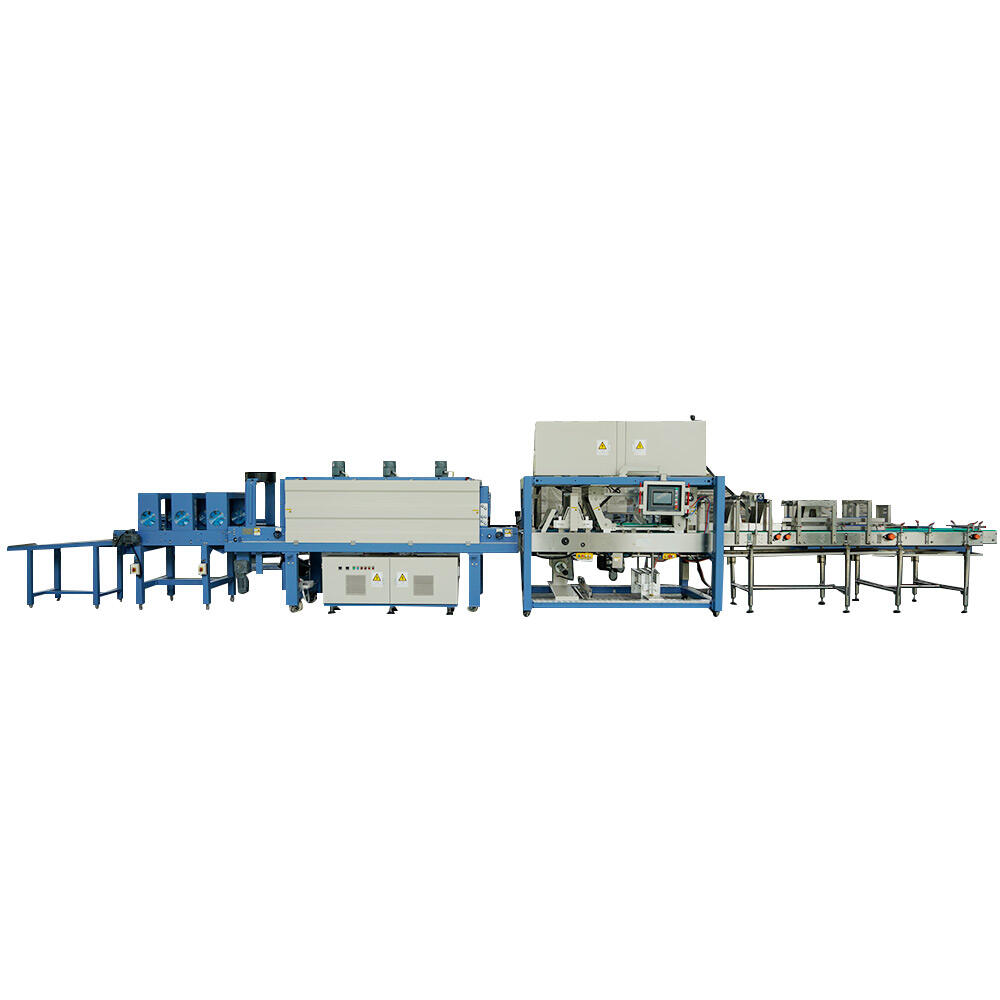
Choosing the right Shrink Packaging Machine is one of the most consequential equipment decisions a production manager can make. Whether you are running a small-batch specialty food operation or managing a high-throughput consumer goods line, the type of machine you select will directly influence your throughput capacity, labor costs, packaging consistency, and ultimately your bottom line. The debate between automatic and manual configurations has persisted for decades, but the answer is rarely universal — it depends almost entirely on your production volume, product mix, and operational goals.
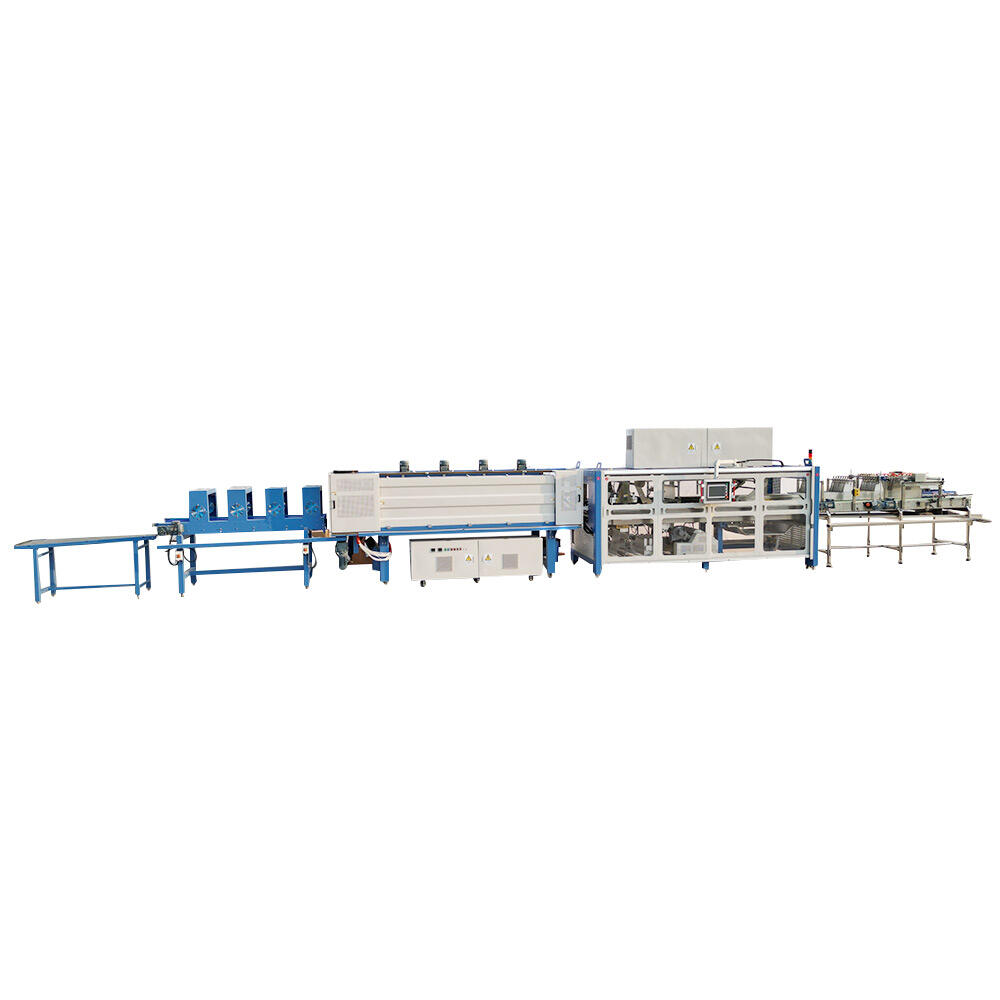
Understanding how each type of Shrink Packaging Machine operates, what production scenarios each one is best suited for, and how to evaluate your own facility's needs will help you arrive at a decision grounded in operational reality rather than assumption. This article walks through the core distinctions, selection criteria, and practical implications of both automatic and manual systems — so you can align your investment with the volume demands your business actually faces.
Understanding the Two Core Types of Shrink Packaging Machine
How Manual Shrink Packaging Machines Operate
A manual Shrink Packaging Machine typically requires an operator to handle most of the packaging process by hand. The operator places the product inside a pre-cut film sleeve or positions it on an L-bar sealer, triggers the seal, and then feeds the wrapped product through a heat tunnel or uses a handheld heat gun to shrink the film around the product. This type of machine demands a consistent human presence throughout the packaging cycle.
Because the process is largely operator-driven, output rates are limited by human speed and endurance. Manual systems are generally simpler mechanically, which means lower initial capital expenditure and easier troubleshooting. They can be well-suited to environments where packaging runs are short, product dimensions change frequently, or the business is still scaling up to justify automation investment.
However, manual operation introduces variability. Seal quality, film tension, and heat application can differ subtly between operators or even between shifts. For products that require consistent presentation — such as retail-ready items or export-grade packaging — this inconsistency can become a measurable business problem over time.
How Automatic Shrink Packaging Machines Operate
An automatic Shrink Packaging Machine integrates film feeding, product conveying, sealing, and heat shrinking into a continuous and largely self-regulating cycle. Products are loaded onto an infeed conveyor, film is wrapped and sealed around each item automatically, and the package passes through an integrated heat tunnel where controlled air circulation shrinks the film to a tight, professional finish.
The level of human involvement is dramatically reduced. Operators primarily monitor machine performance, load film rolls, and manage infeed or outfeed logistics. Advanced automatic systems can also handle bundles, multipacks, and variable product spacing without manual reconfiguration at every changeover, depending on the degree of automation built into the machine's controls.
The speed advantage of an automatic Shrink Packaging Machine is significant. Industrial-grade units can process dozens to hundreds of packages per minute, far beyond any manual operator's capability. This makes them the natural fit for any production environment where volume, consistency, and speed are non-negotiable requirements.
Production Volume as the Primary Selection Criterion
Low to Medium Volume: When Manual Still Makes Sense
For operations producing a few hundred units per day or handling highly variable product lines, a manual Shrink Packaging Machine often remains the most cost-effective solution. The lower acquisition cost, reduced maintenance complexity, and minimal training requirements make manual systems accessible to small manufacturers, artisan producers, and businesses with seasonal demand peaks that do not justify full automation.
In environments where products change size, shape, or packaging style frequently, manual machines also offer flexibility that some entry-level automatic systems cannot easily replicate. Operators can adapt quickly to different product dimensions without mechanical reconfiguration, which preserves agility in dynamic product catalogs.
That said, even at moderate volumes, the hidden cost of manual packaging — ongoing labor, variable seal quality, and the physical limitations of human operators — can erode the initial cost advantage over time. Businesses at this production scale should project growth trajectories carefully before committing to a manual-only approach for the long term.
High Volume: The Operational Case for Automation
Once daily output targets move into the thousands of units or production runs extend across multiple shifts, the economics of a manual Shrink Packaging Machine begin to break down. Labor costs multiply, quality becomes harder to control at scale, and bottlenecks at the packaging station can cascade backward to slow the entire production line.
An automatic Shrink Packaging Machine addresses all of these pressures simultaneously. It delivers consistent output speeds regardless of operator fatigue, maintains repeatable seal integrity across every cycle, and can be integrated into wider production line automation — connecting with labeling systems, checkweighers, or case-packing equipment downstream.
The return on investment for automatic systems at high volume is typically straightforward to calculate. Reduced labor per unit, lower film waste through precision control, and fewer packaging defects all contribute measurable cost savings that compound quickly at high throughput rates. For most mid-to-large production environments, this is not simply a luxury — it is a competitive necessity.
Equipment Capabilities: What the Machine Must Handle
Film Compatibility and Product Versatility
Both automatic and manual versions of a Shrink Packaging Machine can work with common shrink film materials including polyolefin (POF), PVC, and polyethylene. However, automatic machines tend to offer more precise temperature and speed controls, which allows them to handle thinner, more cost-efficient films without compromising package quality. This capability directly reduces film cost per unit at scale.
Product versatility is another dimension worth evaluating. Manual machines can accommodate a wider range of irregular shapes with minimal adjustment, since the operator physically guides the packaging process. Automatic systems, on the other hand, may require specific conveyor spacing, lane configurations, or film width adjustments when switching between product types — though modern servo-driven machines have significantly reduced changeover complexity.
When selecting a Shrink Packaging Machine, it is worth mapping your product portfolio in advance. Identifying the range of dimensions, weights, and packaging configurations you need to accommodate will clarify whether the automatic system's changeover requirements are manageable within your operational rhythm or whether manual flexibility remains a practical advantage.
Heat Tunnel Performance and Package Quality
The heat tunnel is the component most responsible for final package appearance. In automatic systems, the tunnel is typically integrated directly into the Shrink Packaging Machine chassis, with calibrated airflow, temperature zones, and conveyor speed that work together to produce a taut, clear, and wrinkle-free film finish. This matters significantly for retail-facing products where package aesthetics influence consumer perception.
Manual machines rely either on standalone heat tunnels or handheld heat guns. Standalone tunnels can produce acceptable results when properly calibrated, but the consistency depends heavily on how products are fed through and how uniformly the operator has applied the initial film wrap. Handheld heat guns offer portability but rarely achieve the uniform shrink quality that an integrated tunnel produces.
For businesses where packaging appearance is a brand asset — particularly in food, cosmetics, pharmaceuticals, or premium consumer goods — the quality differential between manual and automatic heat application is a genuine business consideration, not merely a cosmetic one. A well-configured Shrink Packaging Machine with an integrated tunnel consistently outperforms manual alternatives on package finish, which directly supports retail acceptance and consumer satisfaction.
Operational Costs and Long-Term Investment Logic
Upfront Cost vs. Total Cost of Ownership
The upfront acquisition cost of a manual Shrink Packaging Machine is substantially lower than an automatic equivalent. Entry-level manual systems can be acquired at a fraction of the cost of fully automatic lines, making them appealing to operations with limited capital budgets. This initial affordability is a legitimate advantage and should not be dismissed out of hand.
However, total cost of ownership over a three-to-five year horizon tells a more complete story. Labor costs for continuous manual operation accumulate rapidly. Film waste from inconsistent sealing, product rework from poor packaging quality, and downtime from operator fatigue or error all represent ongoing cost drains that do not appear in the purchase price calculation but are very real in the monthly P&L.
Automatic systems carry higher maintenance requirements and more complex spare parts profiles, but their per-unit packaging cost at volume is typically lower than manual alternatives by a meaningful margin. Businesses evaluating their Shrink Packaging Machine options should build a multi-year cost model rather than making the decision based on equipment price alone.
Scalability and Future-Proofing Your Packaging Line
One of the strongest arguments for investing in an automatic Shrink Packaging Machine even before volume fully justifies it is scalability. A well-specified automatic machine can grow with your production demand without requiring a wholesale equipment replacement. Adjustments to conveyor speed, temperature profiles, or infeed configurations allow the same machine to serve a business across a significant range of output growth.
Manual systems, by contrast, scale by adding labor — which increases headcount, management complexity, and payroll costs in a linear fashion. There is no mechanical multiplier effect. When a manual packaging operation reaches its ceiling, the only upgrade path is to move to semi-automatic or fully automatic equipment anyway, meaning the delay in automation simply postpones rather than avoids the capital investment.
For businesses with clear growth ambitions or operating in markets where speed-to-shelf is a competitive factor, investing in scalable automatic Shrink Packaging Machine infrastructure earlier in the business lifecycle often delivers a stronger strategic position than deferring that investment to a later, more pressured moment.
Making the Right Selection Decision for Your Business
Key Variables to Evaluate Before Purchasing
Before committing to either an automatic or manual Shrink Packaging Machine, production managers should conduct an honest assessment of current daily unit volume, peak demand periods, product variety, and available floor space. Volume is the primary driver, but it is not the only one. A high-SKU operation with small batch sizes may find that flexibility outweighs raw speed, even at relatively high total volumes.
Workforce considerations also matter. Facilities with access to consistent, trained labor at competitive costs may find manual or semi-automatic solutions viable for longer than facilities in labor-scarce environments. Conversely, operations already struggling to find and retain packaging line workers have an additional structural reason to accelerate automation investment.
Integration requirements with the wider production line are another important dimension. If the Shrink Packaging Machine must interface with upstream filling or forming equipment and downstream labeling or palletizing systems, the communication protocols, line speeds, and physical footprint of automatic systems need to be evaluated for compatibility before purchase.
Semi-Automatic Options as a Bridge Strategy
Many businesses find that a semi-automatic Shrink Packaging Machine offers a practical middle path. Semi-automatic systems automate the most physically demanding and quality-sensitive steps — sealing and heat shrinking — while still requiring an operator to place and position products. This reduces labor fatigue, improves seal consistency, and raises throughput without the capital commitment of full automation.
Semi-automatic configurations are particularly valuable for businesses in a growth phase that expect to cross the volume threshold justifying full automation within one to three years. They also suit operations where product variety makes fully automated infeed handling impractical without major tooling investment.
Evaluating a semi-automatic Shrink Packaging Machine as a bridge strategy is not a compromise — it is a financially rational staging of investment that allows the business to improve packaging quality and output now while preserving capital for full automation at the appropriate scale.
FAQ
At what production volume should I consider switching from manual to automatic Shrink Packaging Machine?
As a general guideline, once your packaging volume consistently exceeds one to two thousand units per shift, the labor cost and quality control limitations of a manual Shrink Packaging Machine typically begin to outweigh the lower equipment acquisition cost. At that scale, an automatic or semi-automatic system usually delivers a faster return on investment through labor savings and reduced film waste alone.
Can an automatic Shrink Packaging Machine handle multiple product sizes?
Yes, most modern automatic Shrink Packaging Machine systems are designed to handle a range of product dimensions through adjustable conveyor widths, film width settings, and temperature profile controls. The ease and speed of changeover between product sizes varies by model and control system sophistication, so this should be a specific technical question during the equipment evaluation and selection process.
What film types are compatible with most Shrink Packaging Machine configurations?
Both automatic and manual Shrink Packaging Machine systems can typically work with polyolefin (POF), PVC, and polyethylene shrink films. Polyolefin is the most widely used option due to its clarity, strength, and compliance with food contact regulations. Automatic machines often offer finer temperature control, which allows them to process thinner-gauge films more reliably, reducing material cost per package.
Is a semi-automatic Shrink Packaging Machine a good long-term investment or just a temporary solution?
A semi-automatic Shrink Packaging Machine can be an excellent long-term investment for operations with moderate volumes, high product variety, or limited floor space. It is not merely a temporary fix. For many small to mid-sized manufacturers, the semi-automatic configuration delivers the right balance of cost, quality, and throughput over the entire useful life of the equipment, particularly when full automation cannot be cost-justified at current production scales.
Table of Contents
- Understanding the Two Core Types of Shrink Packaging Machine
- Production Volume as the Primary Selection Criterion
- Equipment Capabilities: What the Machine Must Handle
- Operational Costs and Long-Term Investment Logic
- Making the Right Selection Decision for Your Business
-
FAQ
- At what production volume should I consider switching from manual to automatic Shrink Packaging Machine?
- Can an automatic Shrink Packaging Machine handle multiple product sizes?
- What film types are compatible with most Shrink Packaging Machine configurations?
- Is a semi-automatic Shrink Packaging Machine a good long-term investment or just a temporary solution?