
 EN
EN
Modern warehousing operations face unprecedented pressure to optimize efficiency while maintaining accuracy and safety standards. The integration of automated equipment has become essential for businesses seeking to remain competitive in today's fast-paced logistics environment. Among the most transformative technologies available to warehouse operators, automated palletizing systems stand out as game-changing solutions that address multiple operational challenges simultaneously. These sophisticated machines revolutionize how products move through distribution centers, offering substantial improvements in throughput, consistency, and worker safety.
Understanding Palletizing Technology and Its Core Components
Mechanical Structure and Design Principles
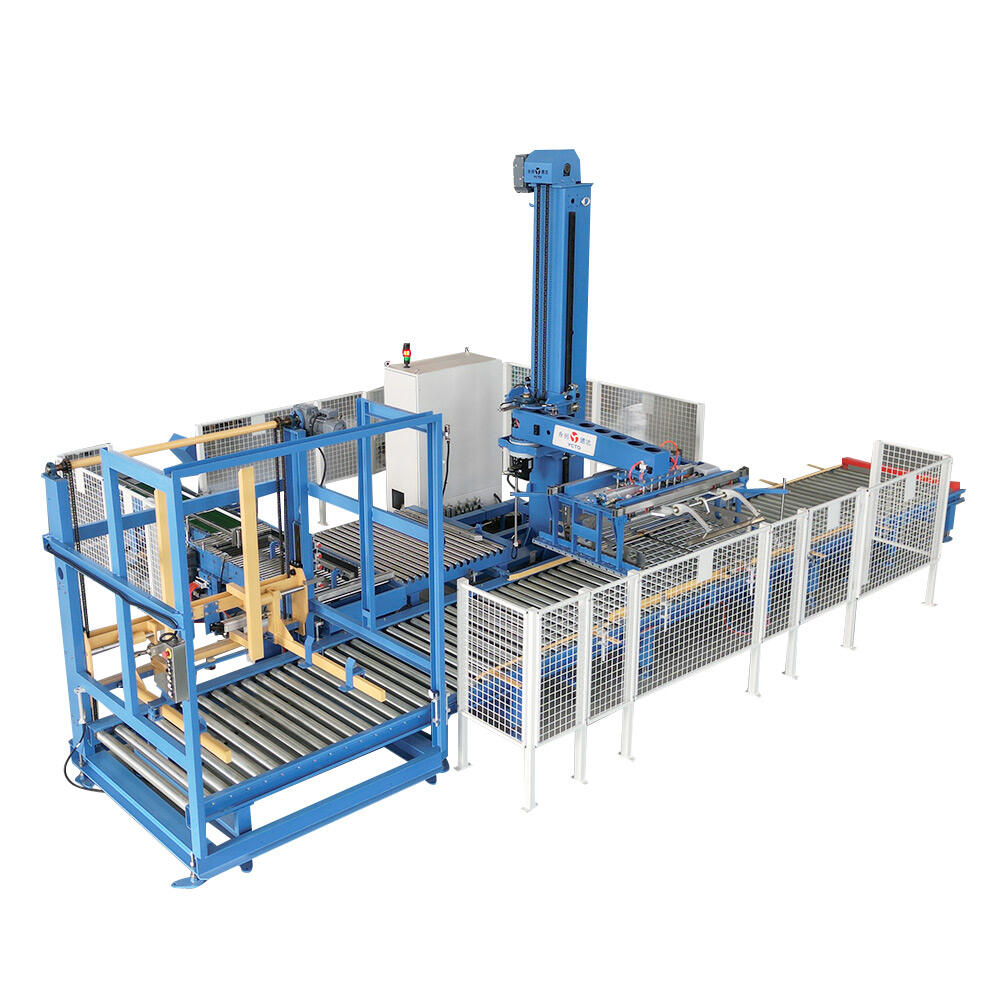
A palletizer operates through a complex system of mechanical components designed to handle various product types and configurations. The foundation consists of robust steel frameworks that provide stability during high-speed operations. Servo-driven actuators control precise movements along multiple axes, ensuring accurate product placement regardless of package dimensions or weight variations. Advanced gripper systems adapt to different product shapes, from bottles and cans to boxes and bags, utilizing vacuum technology or mechanical clamps depending on the application requirements.
The control system integrates sophisticated programming that manages layer patterns, stack heights, and pallet configurations. This intelligent software can store hundreds of different palletizing patterns, automatically adjusting to product changes without manual intervention. Safety systems include light curtains, emergency stops, and collision detection sensors that protect both equipment and personnel while maintaining operational continuity.
Integration with Existing Warehouse Systems
Modern palletizing equipment seamlessly connects with warehouse management systems and enterprise resource planning platforms. This integration enables real-time data exchange, allowing the palletizer to receive instructions directly from production schedules or shipping requirements. Conveyor systems feed products to the palletizing station while automated guided vehicles or forklift systems transport completed pallets to storage areas or loading docks.
Communication protocols such as Ethernet/IP and Modbus ensure compatibility with various industrial networks. The system can interface with quality control stations, automatically rejecting damaged products or incorrect configurations before they reach the palletizing area. This comprehensive integration creates a unified workflow that minimizes manual intervention and reduces the potential for errors throughout the packaging and shipping process.
Operational Efficiency Improvements Through Automated Palletizing
Throughput Enhancement and Speed Optimization
Automated palletizing systems dramatically increase processing speeds compared to manual operations. While human workers typically handle 300-500 cases per hour, a well-configured palletizer can process 1,200-2,000 cases hourly depending on product characteristics and pattern complexity. This acceleration stems from the machine's ability to maintain consistent cycle times without fatigue, breaks, or performance degradation over extended periods.
The speed advantage becomes particularly pronounced during peak shipping periods when manual crews might struggle to maintain pace. Palletizers operate continuously during scheduled production hours, eliminating bottlenecks that often occur at the end-of-line packaging stage. This consistent performance enables warehouses to meet aggressive shipping deadlines while maintaining quality standards that customers expect.
Accuracy and Consistency in Product Handling
Human error represents a significant challenge in manual palletizing operations, leading to damaged products, incorrect layer patterns, and unstable pallet loads. Automated systems eliminate these variables through precise positioning and consistent handling techniques. Each product placement follows programmed specifications exactly, creating uniform pallet configurations that optimize shipping stability and storage efficiency.
The palletizer maintains consistent pressure when placing products, preventing crushing of fragile items while ensuring secure positioning of heavier packages. This controlled approach reduces product damage rates significantly, translating to decreased return costs and improved customer satisfaction. Additionally, uniform pallet construction facilitates better space utilization in trucks and storage facilities.
Cost Reduction and Resource Optimization Benefits
Labor Cost Management and Workforce Allocation
Labor expenses represent one of the largest operational costs in warehouse environments, particularly as wages continue rising and qualified workers become increasingly scarce. Palletizing automation addresses these challenges by reducing the number of personnel required for end-of-line operations while redirecting human resources toward higher-value activities that require cognitive skills and problem-solving abilities.
The reduction in manual labor requirements extends beyond direct cost savings. Automated systems eliminate overtime expenses during peak periods, reduce training costs for new employees, and minimize the impact of employee turnover on operations. Companies can maintain consistent output levels regardless of staffing challenges, providing operational stability that manual systems cannot match.
Maintenance and Operational Cost Considerations
While palletizer systems require regular maintenance, their operational costs prove significantly lower than manual alternatives over time. Preventive maintenance programs ensure reliable performance while predictive maintenance technologies identify potential issues before they cause downtime. Modern equipment features self-diagnostic capabilities that alert operators to service needs, enabling proactive scheduling that minimizes production interruptions.
Energy consumption remains relatively modest compared to the labor costs replaced, and many systems incorporate energy-efficient components that reduce electrical expenses. The durability of properly maintained palletizing equipment often exceeds twenty years, providing excellent return on investment when amortized over the system's operational lifetime.
Safety Improvements and Risk Mitigation
Workplace Injury Prevention
Manual palletizing exposes workers to numerous injury risks, including back strain from repetitive lifting, shoulder injuries from overhead reaching, and potential accidents from falling products. These workplace injuries result in workers' compensation claims, lost productivity, and potential regulatory compliance issues. Automated palletizer systems eliminate most of these risk factors by removing human workers from direct product handling activities.
Safety statistics demonstrate significant reductions in workplace injuries when companies implement automated palletizing solutions. The enclosed design of modern systems provides physical barriers between operators and moving machinery, while safety interlocks prevent operation when maintenance access panels are open. Emergency stop systems enable immediate shutdown if unusual conditions arise, protecting both equipment and personnel.
Product and Equipment Protection
Consistent handling techniques employed by palletizer systems reduce product damage rates substantially compared to manual operations. The controlled environment prevents contamination that might occur through human contact while maintaining consistent packaging integrity throughout the process. This protection extends to the equipment itself, as automated systems experience less wear from proper operation compared to the variable handling that characterizes manual processes.
Advanced sensor systems monitor product positioning and detect abnormalities that might indicate damaged packages or equipment malfunctions. These monitoring capabilities enable immediate corrective action, preventing minor issues from escalating into major problems that could disrupt operations or compromise product quality.
Scalability and Future-Proofing Advantages
Adaptability to Changing Business Requirements
Business growth and market changes require flexible solutions that can accommodate evolving operational demands. Palletizer systems offer exceptional scalability through modular designs that support capacity expansion without complete system replacement. Additional gripper configurations enable handling of new product lines while software updates provide enhanced functionality and improved efficiency algorithms.
The programmable nature of modern palletizing equipment allows rapid reconfiguration for different products or customer requirements. Pattern libraries can be expanded easily, and new palletizing sequences can be developed and tested without disrupting ongoing operations. This flexibility proves invaluable for companies serving diverse markets or experiencing seasonal demand variations.
Technology Integration and Industry 4.0 Compatibility
Contemporary palletizer designs incorporate Internet of Things connectivity and advanced analytics capabilities that align with Industry 4.0 initiatives. These features enable remote monitoring, predictive maintenance, and performance optimization through data analysis. Cloud-based platforms provide access to operational metrics and trend analysis that support continuous improvement efforts.
Artificial intelligence algorithms can optimize palletizing patterns based on shipping requirements, product characteristics, and historical performance data. Machine learning capabilities enable the system to improve efficiency over time by identifying optimal configurations and operational parameters. This technological advancement ensures that palletizer investments remain valuable as warehouse automation continues evolving.
Implementation Considerations and Best Practices
Site Preparation and Installation Requirements
Successful palletizer implementation requires careful planning and site preparation to ensure optimal performance and seamless integration with existing operations. Floor loading capacity must accommodate the equipment weight and dynamic forces generated during operation. Electrical infrastructure should provide adequate power supply with appropriate surge protection and emergency shutdown capabilities.
Space allocation must consider not only the palletizer footprint but also maintenance access, product flow paths, and safety clearances. Integration with conveyor systems requires precise alignment and coordinated controls to prevent operational conflicts. Environmental factors such as temperature, humidity, and dust levels should be evaluated to ensure equipment longevity and reliable performance.
Training and Change Management Strategies
Successful automation implementation depends heavily on effective training programs and change management approaches. Operators require comprehensive instruction on system operation, basic troubleshooting, and safety procedures. Maintenance personnel need specialized training on equipment servicing, software updates, and diagnostic procedures specific to the palletizer technology.
Change management strategies should address employee concerns about job displacement while highlighting opportunities for skill development and career advancement. Clear communication about the benefits of automation helps build support for the transition while establishing realistic expectations for implementation timelines and performance improvements.
FAQ
What types of products can be handled by automated palletizing systems
Automated palletizer systems can handle an extensive range of products including bottles, cans, bags, boxes, cases, and irregularly shaped items. The gripper system determines handling capabilities, with vacuum grippers suitable for smooth surfaces and mechanical clamps for textured or porous products. Weight capacity typically ranges from lightweight consumer goods to industrial products weighing several hundred pounds. Product dimensions and packaging materials affect system configuration, but most palletizers can accommodate significant variation through adjustable components and programmable parameters.
How long does it take to install and commission a palletizing system
Installation and commissioning timelines vary based on system complexity, site preparation requirements, and integration needs. Simple standalone units may be operational within 2-4 weeks, while complex systems with extensive conveyor integration can require 8-12 weeks. Site preparation activities such as foundation work, electrical installation, and conveyor modifications often determine the overall project duration. Thorough planning and coordination with experienced integrators can minimize installation time while ensuring proper system functionality from startup.
What maintenance requirements should be expected with palletizer equipment
Palletizer maintenance requirements include daily visual inspections, weekly lubrication of moving components, and monthly comprehensive checks of all systems. Preventive maintenance schedules typically call for quarterly detailed inspections, annual major component servicing, and periodic software updates. Most systems include diagnostic capabilities that alert operators to maintenance needs, enabling proactive scheduling that prevents unplanned downtime. Proper maintenance programs can extend equipment life to 20+ years while maintaining optimal performance levels.
How quickly can a palletizer system pay for itself through operational savings
Return on investment for palletizer systems typically occurs within 18-36 months depending on labor costs, operational volume, and system utilization rates. Labor savings represent the primary cost benefit, with additional value derived from reduced product damage, improved safety metrics, and increased throughput capacity. Higher volume operations generally achieve faster payback periods due to greater labor cost displacement. Comprehensive ROI analysis should include direct cost savings, productivity improvements, and intangible benefits such as improved worker satisfaction and operational reliability.
Table of Contents
- Understanding Palletizing Technology and Its Core Components
- Operational Efficiency Improvements Through Automated Palletizing
- Cost Reduction and Resource Optimization Benefits
- Safety Improvements and Risk Mitigation
- Scalability and Future-Proofing Advantages
- Implementation Considerations and Best Practices
- FAQ