
 EN
EN
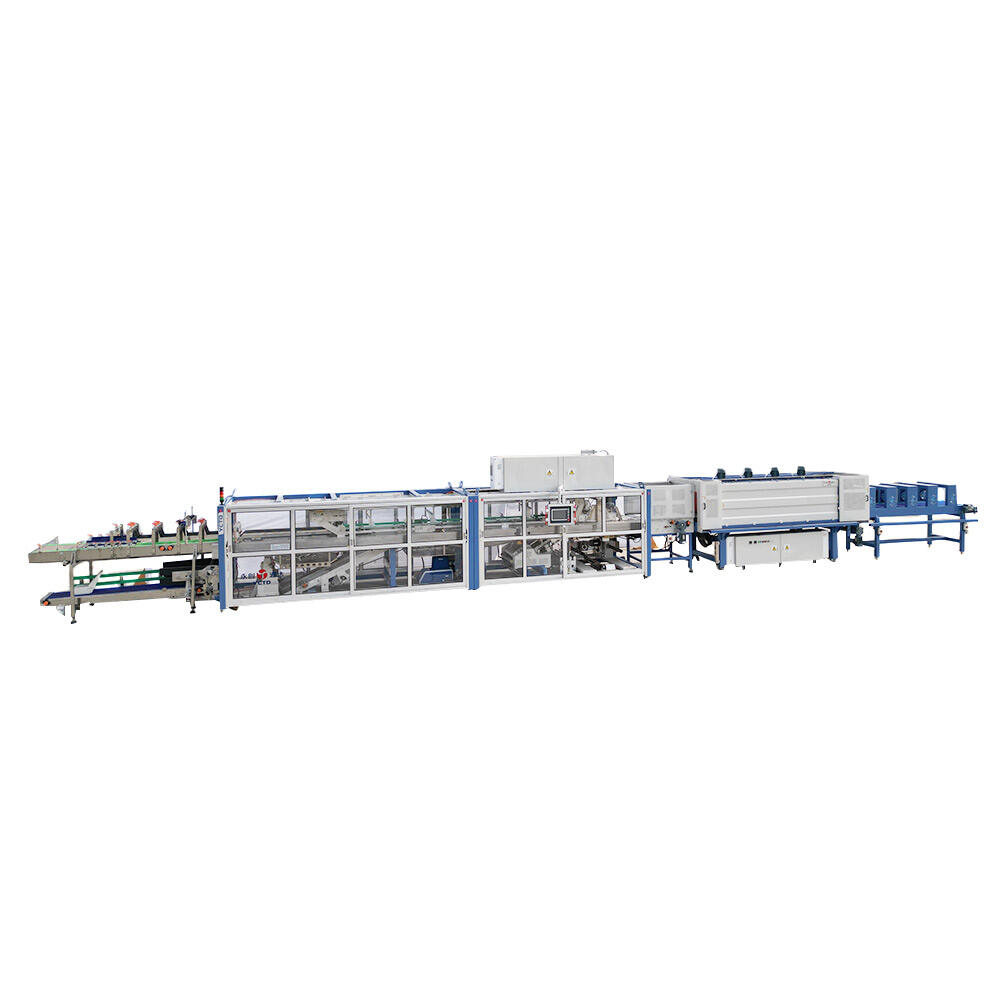
Modern packaging operations demand efficiency, reliability, and cost-effectiveness when selecting the right equipment for their production lines. The choice between L-bar and continuous motion shrink film packaging systems represents one of the most critical decisions facing manufacturers today. Understanding the fundamental differences between these two shrink wrapper technologies can significantly impact your operational efficiency, product quality, and bottom line. Each system offers distinct advantages depending on your specific production requirements, budget constraints, and long-term business objectives.
Understanding L-Bar Shrink Wrapper Technology
Operating Principles and Mechanics
L-bar shrink wrapper systems operate on a straightforward principle where products are positioned on a platform beneath an L-shaped sealing bar. The sealing mechanism creates precise cuts and seals along two perpendicular edges of the shrink film, forming the characteristic L-shaped seal pattern. This semi-automatic process requires operator intervention to position products and initiate the sealing cycle, making it ideal for smaller production volumes or specialized packaging requirements. The simplicity of the L-bar design translates to lower maintenance requirements and easier troubleshooting when issues arise.
The heating element within the L-bar assembly operates at precisely controlled temperatures to ensure consistent sealing quality across different film materials. Most modern L-bar shrink wrapper units feature adjustable temperature controls and timing mechanisms that accommodate various product sizes and film thicknesses. The sealing process typically takes between 2-4 seconds per cycle, depending on the film material and product dimensions. This controlled approach ensures minimal waste and consistent package integrity, particularly important for products requiring tamper-evident packaging solutions.
Production Capacity and Speed Limitations
L-bar shrink wrapper machines typically handle between 200-800 packages per hour, depending on operator efficiency and product complexity. The manual or semi-automatic nature of these systems inherently limits their throughput compared to fully automated alternatives. However, this limitation becomes an advantage when dealing with irregularly shaped products, fragile items, or applications requiring careful positioning and handling. The operator control allows for real-time adjustments and quality checks that automated systems might miss.
Production speed with L-bar systems varies significantly based on product characteristics and packaging requirements. Simple rectangular products can be processed more quickly than complex shapes requiring careful positioning. The learning curve for operators is typically minimal, with most personnel achieving proficiency within a few hours of training. This accessibility makes L-bar shrink wrapper equipment particularly attractive for businesses with varying production schedules or seasonal packaging demands.
Continuous Motion Shrink Wrapper Systems
Advanced Automation and Integration
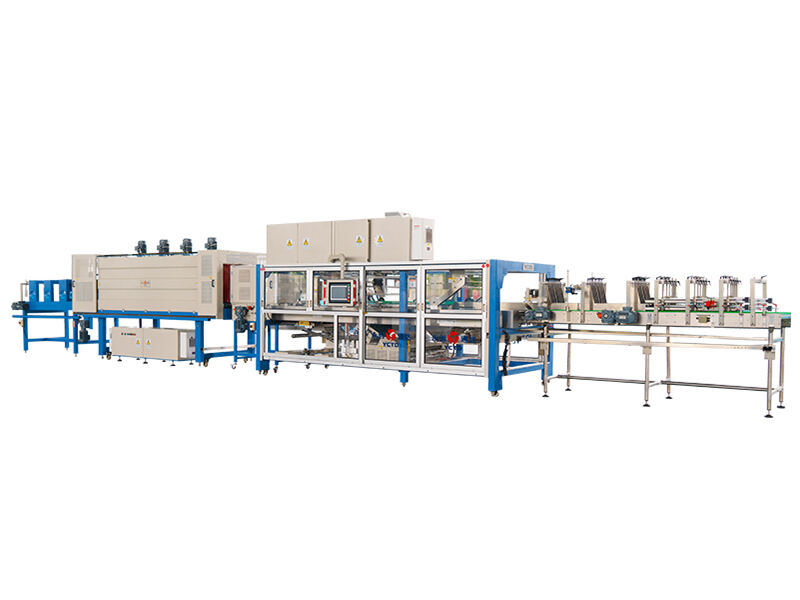
Continuous motion shrink wrapper systems represent the pinnacle of packaging automation, featuring sophisticated conveyor integration and fully automated sealing processes. These systems maintain constant product flow through the packaging process, eliminating the stop-start cycles characteristic of L-bar equipment. Products enter the sealing chamber on synchronized conveyor belts, where automated cutting and sealing mechanisms create perfect packages without human intervention. The integration capabilities allow seamless connection with upstream and downstream equipment in complete packaging lines.
The technological sophistication of continuous motion systems includes programmable logic controllers, servo-driven mechanisms, and advanced sensor arrays that monitor product positioning and film tension. These features enable precise control over sealing parameters and automatic adjustments for different product variations. The automated film feeding and cutting mechanisms reduce material waste while maintaining consistent package quality. Most modern continuous motion shrink wrapper systems include touchscreen interfaces that simplify operation and provide detailed production monitoring capabilities.
High-Volume Production Capabilities
Continuous motion shrink wrapper machines excel in high-volume applications, typically processing between 1,500-6,000 packages per hour depending on product size and configuration. The constant motion principle eliminates bottlenecks associated with batch processing, enabling smooth integration into high-speed production environments. These systems particularly benefit facilities operating multiple shifts or maintaining continuous production schedules where downtime directly impacts profitability.
The scalability of continuous motion systems allows manufacturers to adjust production speeds based on demand fluctuations while maintaining consistent quality standards. Advanced models feature variable speed controls that synchronize with upstream equipment, preventing product backup or gaps in the packaging line. This flexibility proves invaluable in modern manufacturing environments where product mix changes frequently and production scheduling requires rapid adjustments to meet customer demands.
Cost Analysis and Investment Considerations
Initial Capital Investment
The initial investment for L-bar shrink wrapper equipment typically ranges from $5,000 to $50,000, making it accessible to small and medium-sized businesses with limited capital budgets. The lower entry cost reflects the simpler mechanical design and reduced automation complexity. However, businesses must consider the ongoing labor costs associated with semi-automatic operation, which can significantly impact total cost of ownership over time. The relatively simple construction also means lower shipping and installation costs compared to more complex systems.
Continuous motion shrink wrapper systems require substantially higher initial investments, typically ranging from $75,000 to $500,000 or more for specialized applications. The higher cost reflects advanced automation technology, sophisticated control systems, and precision engineering required for reliable high-speed operation. While the initial investment appears daunting, the increased throughput and reduced labor requirements often justify the expense for medium to large-scale operations. Financing options and leasing programs are commonly available to help businesses manage the capital investment while realizing immediate productivity benefits.
Operating Costs and Return on Investment
L-bar shrink wrapper systems typically require dedicated operator attention, resulting in ongoing labor costs that must be factored into the total cost equation. However, the lower maintenance requirements and simplified troubleshooting procedures help offset these costs. Energy consumption is generally lower due to the intermittent operation cycle and simpler heating systems. Replacement parts are typically more affordable and readily available, reducing long-term maintenance expenses.
Continuous motion systems offer compelling return on investment calculations for high-volume operations through reduced labor requirements and increased throughput. The automated operation allows one operator to monitor multiple machines or perform other value-added tasks. However, the complex automation requires specialized maintenance skills and more expensive replacement components. The shrink wrapper energy consumption is higher due to continuous operation, but the per-package energy cost often decreases due to higher efficiency and throughput.
Performance Comparison and Application Suitability
Package Quality and Consistency
L-bar shrink wrapper systems excel in applications requiring careful attention to package presentation and quality control. The operator involvement allows for real-time adjustments and immediate correction of any packaging defects. This human oversight proves valuable when dealing with premium products or applications where package appearance significantly impacts customer perception. The controlled sealing process typically produces clean, professional-looking packages with minimal film waste.
Continuous motion shrink wrapper systems deliver exceptional consistency once properly calibrated, producing thousands of identical packages with minimal variation. The automated controls eliminate human error and maintain precise sealing parameters throughout extended production runs. However, the rapid processing speed may make it challenging to detect and correct quality issues immediately. Advanced systems include quality monitoring sensors that automatically reject defective packages, maintaining overall production quality standards.
Flexibility and Product Adaptability
The manual nature of L-bar shrink wrapper operation provides exceptional flexibility for handling diverse product lines and frequent changeovers. Operators can easily accommodate different product sizes, shapes, and packaging requirements without extensive machine reconfiguration. This adaptability makes L-bar systems ideal for contract packagers, small manufacturers with diverse product lines, or businesses experiencing frequent product changes. The setup time for new products is minimal, often requiring only minor adjustments to sealing parameters.
Continuous motion systems require more extensive changeover procedures when switching between different products or package configurations. The automated nature demands precise programming and mechanical adjustments to accommodate varying product dimensions. However, modern systems feature quick-change mechanisms and stored parameter sets that reduce changeover time once the initial setup is complete. The investment in changeover automation pays dividends in facilities with predictable product schedules and longer production runs.
Maintenance and Reliability Factors
Maintenance Requirements and Complexity
L-bar shrink wrapper maintenance is typically straightforward, requiring basic mechanical skills and common tools. The simpler design means fewer components that can fail, and most maintenance tasks can be performed by plant personnel without specialized training. Regular maintenance includes cleaning sealing elements, checking film feeding mechanisms, and verifying temperature controls. The accessibility of components makes troubleshooting and repairs more manageable, reducing downtime and maintenance costs.
Continuous motion shrink wrapper systems require more sophisticated maintenance protocols due to their complex automation and precision engineering. Preventive maintenance schedules are critical for maintaining optimal performance and preventing costly breakdowns. The systems typically require specialized technical support for major repairs or calibration procedures. However, the advanced diagnostic capabilities often identify potential issues before they cause production interruptions, enabling proactive maintenance planning.
Reliability and Uptime Considerations
The mechanical simplicity of L-bar shrink wrapper equipment translates to excellent reliability and minimal unscheduled downtime. The reduced complexity means fewer potential failure points, and most issues can be resolved quickly without disrupting production schedules. The operator presence allows for immediate detection and correction of minor problems before they escalate into major failures. This reliability makes L-bar systems particularly suitable for critical applications where packaging interruptions would significantly impact operations.
Continuous motion systems, while more complex, often demonstrate superior overall reliability due to their precision engineering and quality construction. The automated monitoring systems provide early warning of potential issues, enabling preventive action before failures occur. However, when problems do arise, they may require specialized expertise and longer repair times. The key to maximizing uptime lies in following recommended maintenance schedules and maintaining adequate spare parts inventory.
FAQ
What factors should determine whether to choose an L-bar or continuous motion shrink wrapper system
The primary factors include production volume requirements, available labor resources, capital budget constraints, and product diversity. L-bar systems suit operations processing fewer than 800 packages per hour with diverse product lines and limited capital budgets. Continuous motion systems benefit high-volume operations exceeding 1,500 packages per hour with consistent product specifications and adequate capital investment. Consider your growth projections, as upgrading from L-bar to continuous motion later may be more expensive than investing in appropriate capacity initially.
How do film costs compare between L-bar and continuous motion shrink wrapper systems
Both systems use similar shrink wrapper film materials, but continuous motion systems typically achieve better material utilization due to precise automated cutting mechanisms. L-bar systems may generate slightly more waste during manual positioning and cutting processes, particularly during operator training periods. However, the ability to make real-time adjustments with L-bar systems can prevent larger waste incidents that might occur with automated systems experiencing calibration issues. Overall film costs per package are generally comparable when systems are properly operated and maintained.
Can L-bar shrink wrapper systems be upgraded to continuous motion capabilities
Generally, L-bar and continuous motion shrink wrapper systems are fundamentally different in design and cannot be directly upgraded from one to the other. The mechanical principles, control systems, and structural requirements differ significantly between the two technologies. However, some manufacturers offer modular systems that can be expanded with additional automation components over time. If future expansion to continuous motion is anticipated, consider discussing modular options with equipment suppliers during the initial selection process.
What training requirements exist for operating each type of shrink wrapper system
L-bar shrink wrapper operation requires minimal training, with most operators achieving proficiency within a few hours or days. The manual nature allows operators to develop intuitive understanding of optimal positioning and timing. Continuous motion systems require more extensive training covering automated controls, programming interfaces, and diagnostic procedures. Initial training typically takes several days to weeks, depending on system complexity and operator experience. Ongoing training may be necessary as systems are upgraded or new features are added to maintain optimal performance.
Table of Contents
- Understanding L-Bar Shrink Wrapper Technology
- Continuous Motion Shrink Wrapper Systems
- Cost Analysis and Investment Considerations
- Performance Comparison and Application Suitability
- Maintenance and Reliability Factors
-
FAQ
- What factors should determine whether to choose an L-bar or continuous motion shrink wrapper system
- How do film costs compare between L-bar and continuous motion shrink wrapper systems
- Can L-bar shrink wrapper systems be upgraded to continuous motion capabilities
- What training requirements exist for operating each type of shrink wrapper system