
 EN
EN
Modern manufacturing facilities face increasing pressure to optimize their packaging operations while maintaining product quality and reducing labor costs. A palletizer represents a transformative solution that addresses these challenges by automating the complex process of arranging products onto pallets with precision and efficiency. This advanced machinery has become indispensable across industries ranging from food and beverage to pharmaceuticals, offering unparalleled consistency in packaging operations. The strategic implementation of automated palletizing systems delivers measurable returns on investment while positioning companies for sustainable growth in competitive markets.
Understanding Palletizer Technology and Applications
Core Components and Operating Principles
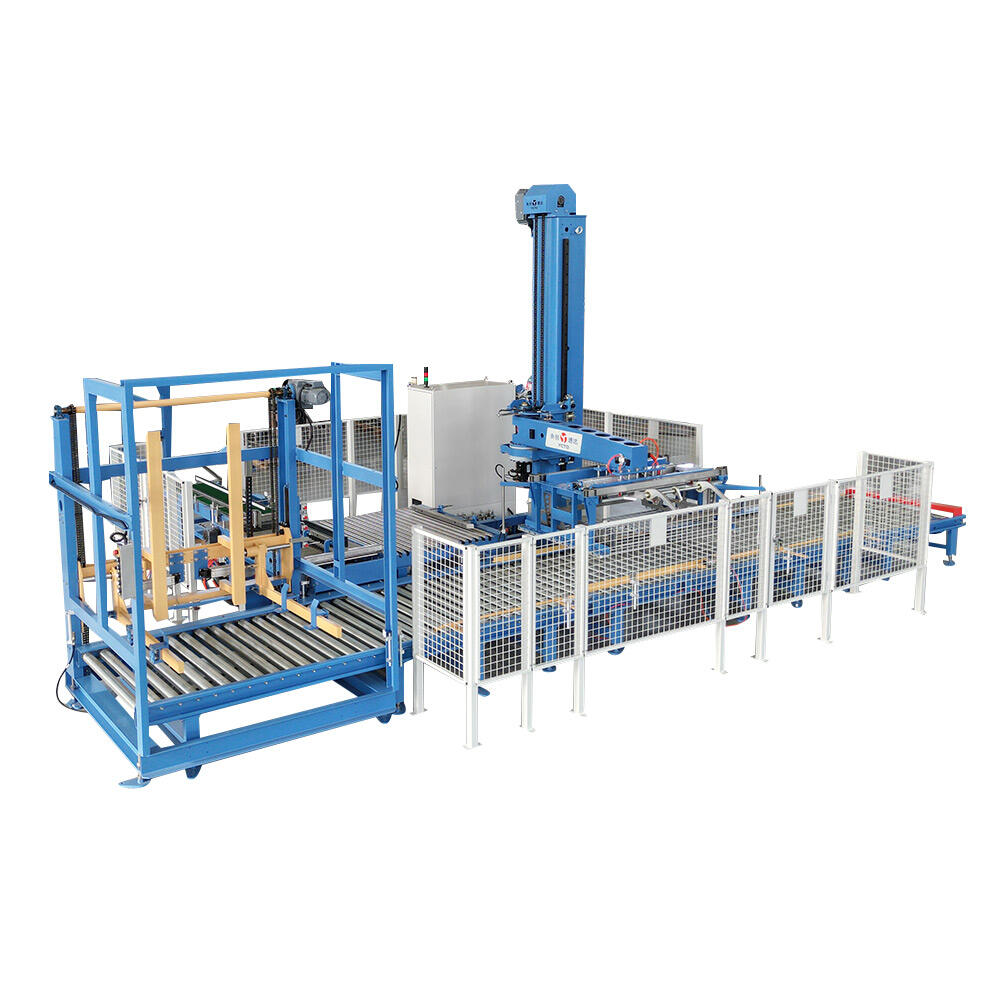
A palletizer system integrates sophisticated mechanical components with advanced control software to create seamless packaging workflows. The fundamental architecture includes robotic arms or mechanical conveyors that position products according to predetermined patterns, ensuring optimal pallet utilization and load stability. Modern systems incorporate vision systems and sensors that verify product placement accuracy, detecting and correcting positioning errors in real-time. These technological innovations enable palletizers to handle diverse product types while maintaining consistent quality standards throughout extended production runs.
The control systems powering contemporary palletizer equipment utilize programmable logic controllers and human-machine interfaces that simplify operation and maintenance procedures. Operators can easily modify palletizing patterns, adjust speed parameters, and monitor system performance through intuitive touchscreen displays. This user-friendly approach reduces training requirements while providing comprehensive diagnostic capabilities that minimize unplanned downtime. Advanced palletizer models also feature predictive maintenance algorithms that analyze operational data to schedule maintenance activities before component failures occur.
Industry-Specific Configuration Options
Different industrial applications require specialized palletizer configurations that accommodate unique product characteristics and packaging requirements. Food and beverage manufacturers benefit from sanitary designs featuring stainless steel construction and washdown capabilities that meet strict hygiene standards. Chemical and pharmaceutical industries require explosion-proof palletizer systems with specialized materials that resist corrosive substances while maintaining operational reliability. The flexibility of modern palletizing technology allows manufacturers to customize solutions that align with specific regulatory requirements and operational constraints.
E-commerce and distribution centers increasingly rely on palletizer systems designed for mixed-case palletizing, where different product types must be arranged on single pallets according to complex algorithms. These applications demand advanced software capabilities that optimize pallet configurations for shipping efficiency while preventing product damage during transportation. Retail packaging operations utilize palletizer equipment that creates display-ready pallets, arranging products in configurations that facilitate efficient store stocking procedures.
Operational Benefits and Performance Advantages
Labor Cost Reduction and Workforce Optimization
Implementing a palletizer system delivers immediate labor cost benefits by eliminating manual palletizing tasks that traditionally require multiple workers per shift. This automation allows manufacturers to redeploy human resources to higher-value activities such as quality control, maintenance, and process optimization. The consistent performance of palletizing machinery eliminates variations in productivity associated with worker fatigue, training levels, and turnover rates. Companies report labor cost savings ranging from 30 to 50 percent within the first year of palletizer implementation.
Beyond direct cost reductions, automated palletizing systems enhance workplace safety by eliminating repetitive lifting tasks that contribute to musculoskeletal injuries among packaging personnel. The reduction in workplace injury claims and associated workers' compensation costs provides additional financial benefits that compound over time. Modern palletizer installations also address labor shortage challenges by reducing dependency on manual workers for critical packaging operations, ensuring consistent production capacity regardless of staffing fluctuations.
Quality Consistency and Product Protection
Automated palletizing systems deliver superior consistency compared to manual operations, ensuring uniform pallet configurations that optimize shipping efficiency and product protection. The precise positioning capabilities of palletizer equipment minimize product damage during handling and transportation, reducing costly returns and customer complaints. Consistent pallet patterns also improve warehouse storage efficiency and facilitate automated handling by downstream systems such as stretch wrappers and conveyor networks.
Quality control integration within palletizer systems enables real-time monitoring of packaging parameters such as product orientation, spacing, and stacking height. These monitoring capabilities provide immediate feedback when deviations occur, allowing operators to implement corrective actions before defective pallets enter the supply chain. Documentation features within advanced palletizing systems create detailed production records that support traceability requirements and quality management system compliance across regulated industries.
Selection Criteria and Implementation Considerations
Capacity Requirements and Throughput Analysis
Selecting the appropriate palletizer system requires comprehensive analysis of current and projected production volumes to ensure adequate capacity for future growth. Throughput specifications must account for product changeover times, maintenance intervals, and peak production periods to maintain consistent packaging performance. Different palletizer technologies offer varying speed capabilities, from high-speed robotic systems capable of handling 2,000 cases per hour to specialized configurations designed for heavy products requiring slower, more precise handling.
Integration requirements with existing packaging lines significantly influence palletizer selection decisions, as systems must coordinate with upstream equipment such as case sealers and labelers. Buffer conveyor capacity and accumulation zones affect overall line efficiency, requiring careful consideration during the design phase. Production scheduling flexibility depends on the palletizer's ability to handle multiple product types and pallet configurations without extensive changeover procedures.
Space Requirements and Facility Integration
Facility layout constraints play a crucial role in palletizer system design, as equipment footprint must accommodate both the machinery and necessary safety zones around moving components. Ceiling height requirements vary significantly between different palletizer types, with robotic systems typically requiring more vertical space than conventional mechanical designs. Utility requirements including electrical power, compressed air, and network connectivity must be planned during facility preparation to ensure proper system integration.
Material flow patterns within the facility influence palletizer placement and orientation to minimize product handling distances and optimize overall packaging efficiency. Integration with warehouse management systems requires careful planning of communication protocols and data exchange formats to maintain inventory accuracy and shipment tracking capabilities. Environmental considerations such as temperature control and dust management may require specialized palletizer configurations to maintain optimal performance in challenging operating conditions.
Return on Investment and Financial Benefits
Cost Analysis and Payback Calculations
Comprehensive financial analysis of palletizer investments must consider both direct and indirect cost benefits to accurately assess return on investment potential. Direct savings include labor cost reductions, decreased product damage rates, and improved packaging material utilization efficiency. Indirect benefits encompass reduced workers' compensation claims, enhanced production capacity flexibility, and improved customer satisfaction through consistent product quality.
Typical palletizer systems demonstrate payback periods ranging from 18 to 36 months, depending on production volume, labor costs, and system complexity. Higher-volume operations generally achieve faster payback due to greater labor savings, while specialty applications may require longer payback periods but offer strategic advantages in market positioning and operational flexibility. Financing options including equipment leasing and performance-based contracts can improve cash flow management during implementation phases.
Long-Term Value Creation and Competitive Advantages
Palletizer investments contribute to long-term competitive positioning by enabling consistent production capacity scaling without proportional increases in labor requirements. This scalability advantage becomes particularly valuable during market growth phases when competitors may struggle to secure adequate packaging workforce. Advanced palletizing capabilities also support new product development initiatives by providing flexible packaging solutions that accommodate innovative product formats and packaging requirements.
Technology evolution within palletizer systems ensures continued value creation through software updates and capability enhancements that extend equipment lifespan and functionality. Modern systems designed with modular architectures support future upgrades and expansion options that protect initial investments while adapting to changing operational requirements. The reliability and consistency of automated palletizing operations also enhance customer relationships by ensuring reliable delivery schedules and product quality standards.
FAQ
What types of products can be handled by modern palletizer systems?
Contemporary palletizer systems accommodate an extensive range of product types including cases, bags, bottles, cans, and irregularly shaped items weighing from a few ounces to several hundred pounds. Advanced gripper technologies and vision systems enable handling of fragile products such as glass containers and flexible packaging materials. Specialized configurations support challenging applications including frozen products, corrosive chemicals, and products requiring sterile handling environments.
How much space is required for palletizer installation?
Space requirements vary significantly based on palletizer type and configuration, with compact robotic systems requiring as little as 200 square feet including safety zones, while high-capacity conventional systems may require 1,000 square feet or more. Ceiling height requirements range from 12 feet for low-profile designs to 20 feet for full-height robotic systems. Facility modifications may include reinforced flooring for heavy equipment and utility connections for power and compressed air systems.
What maintenance requirements should be expected with palletizer equipment?
Routine maintenance for palletizer systems typically includes daily inspection procedures, weekly lubrication schedules, and monthly component checks that require minimal technical expertise. Major maintenance activities such as bearing replacement, belt changes, and software updates are generally scheduled quarterly or annually based on operating hours and manufacturer recommendations. Preventive maintenance programs supported by remote monitoring capabilities help minimize unplanned downtime and extend equipment lifespan.
Can existing packaging lines be retrofitted with palletizer systems?
Most existing packaging lines can accommodate palletizer integration through careful planning and modification of conveyor interfaces and control systems. Retrofit projects require detailed analysis of current equipment capabilities, product flow patterns, and available floor space to determine optimal integration approaches. Professional engineering assessment ensures proper system coordination and identifies necessary modifications to achieve seamless operation between new and existing equipment components.